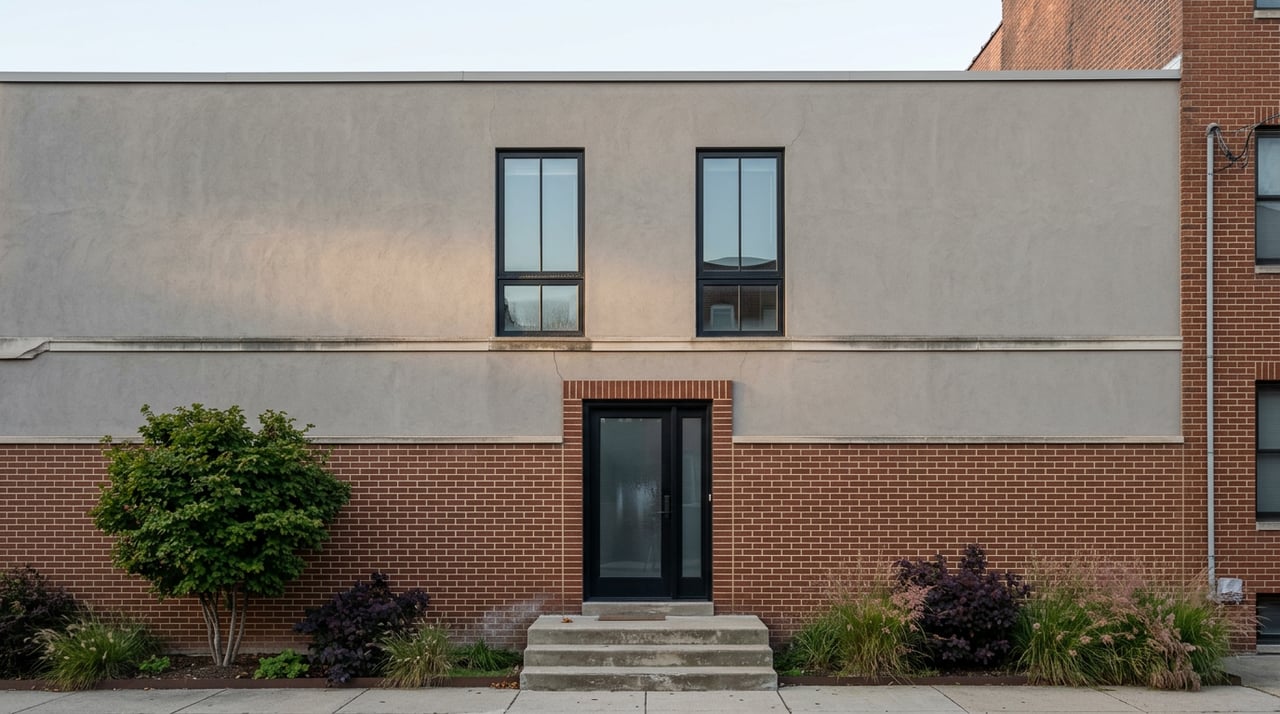
If a condo costs nearly half as much as a house in the same metro area, why would anyone choose the house? That's the question a lot of Denver buyers are asking themselves right now, and on paper it looks like an easy answer.
Then a real example gets in the way. Last month, the Denver Gazette reported on a one-bedroom condo in Littleton that closed for $215,000 back in 2024. A steal, by any measure of Denver's median prices. Its annual HOA dues came to $3,867. That's roughly $322 a month, on top of the mortgage, on a unit priced at a third of what a typical detached home costs in the city. The sticker price told one story. The HOA statement told another.
That gap is the thing worth understanding before you fall in love with a condo's price tag or write off a detached home as out of reach. Denver's housing market isn't one market right now. It's two, and they're moving in close to opposite directions.
Two Markets Wearing One Median
Whenever someone quotes you "the Denver median," ask which Denver they mean. In the August 2026 Denver housing report, built on the prior month's closed sales, single-family detached homes in the city carried a median price near $660,000, moved with roughly three months of inventory on the ground, and typically went under contract in about 17 days. That's still a market that favors sellers, though not an aggressive one. Buyers are negotiating, just not usually on price. Across the metro, close to 63 percent of closed sales in recent months have included some form of seller concession, with a median value around $10,000, mostly used for rate buydowns rather than sticker discounts.
Attached properties, meaning condos and townhomes, are living in a different market entirely. Median prices there have fallen to around $380,000, but inventory has stretched to nearly six months of supply. That's a buyer's market by almost any definition, and it's been building for a while.
| Detached (single-family) | Attached (condo/townhome) | |
|---|---|---|
| Median price, Aug. 2026 report | $660,000 | $380,000 |
| Inventory position | About 3 months | Near 6 months |
| Market condition | Balanced, seller-leaning | Buyer-favorable |
A lower median with more supply sitting unsold is part of the picture. HOA costs are another part buyers need to consider.
Why Wildfire Isn't the Villain Here
Ask most Denver buyers what's driving up insurance costs and they'll say wildfire. The state's own data says otherwise. An analysis released by the Colorado Division of Insurance in February 2026 found that in Denver, wildfire accounts for only about one percent of a typical homeowners premium. Hail is the real driver, and it isn't close. In Summit County, hail makes up nearly 36 percent of premium costs even though the county rarely sees serious storms. In Yuma County, it's closer to 54 percent.
Carole Walker, who leads the Rocky Mountain Insurance Information Association, put it plainly in Live Insurance News: "We live in hail alley." Denver sits inside a corridor stretching from Nebraska through Colorado that produces some of the country's most damaging hailstorms, and insurers have been repricing risk across the entire region in response, not just in the neighborhoods that get hit hardest.
For a single-family homeowner, that mostly shows up as a higher premium and maybe a bigger deductible. For a condo building, it shows up differently. One master insurance policy covers the whole structure, and when that policy renews at a higher rate, every owner in the building splits the increase through their HOA dues, whether or not their own unit ever filed a claim.
Comparing New-Build and Condo Prices
A new-build example adds another point of comparison.
Oakwood Homes is currently selling a two-bedroom, two-bath detached home with an attached two-car garage for just under $300,000 at its Muegge Farms community in Bennett, east of Denver International Airport. That's a price point that used to belong exclusively to condos. Cooper Thayer, whose firm operates under the Keller Williams brand, explained the logic behind it to the Denver Gazette this way: "It's counterintuitive, but frame construction is a lot cheaper per-square-foot."
Condo buildings, especially the concrete and steel mid-rise and high-rise structures common in Denver's core neighborhoods, cost more to build than a wood-frame house on a lot in Bennett or Green Valley Ranch. That construction math flows straight into insurance replacement costs too, since a policy is priced to cover what it would actually take to rebuild. When a builder can put a detached home on the market near the same price as a condo, and that condo comes with a monthly HOA bill the house doesn't have, the condo's "discount" starts looking a lot smaller.
HOA Costs Beyond Regular Dues
Regular HOA dues are only part of the exposure. The other part is the special assessment, which buyers should consider before making an offer.
When an association's reserve fund isn't large enough to absorb a jump in insurance costs or an unexpected repair, the resulting shortfall is worth considering. These range from a few hundred dollars to several thousand per unit, depending on the size of the shortfall and how well-funded the building was going in.
The insurance mechanics make this more likely, not less. The state's own homeowner insurance toolkit notes that deductibles on association master policies have been climbing from around 5 percent of the insured value to 10 percent, and that individual HO-6 policies, the ones condo owners carry for their own units, don't always include enough loss-assessment coverage to close that gap. A building with an aging roof and thin reserves is one hailstorm away from asking every owner for a check.
The Paperwork That Actually Tells You the Story
None of this means a condo is automatically a bad move. A building with a healthy reserve fund, a recently renewed master policy, and transparent finances can be a genuinely sound purchase. The problem is that you can't tell which kind of building you're looking at from the listing photos.
Colorado law already gives buyers a path to find out. Under the Colorado Common Interest Ownership Act, the association has to produce a resale certificate before closing, and, according to J. Baker Law Group, Colorado sellers are required more broadly to disclose known conditions that materially affect a property's value.
Before you remove any contingencies on a condo or townhome, ask for:
- The current master insurance policy, including the premium, the renewal date, and any recent claims
- The most recent reserve study and the association's current funding level against it
- Board meeting minutes from at least the past year, looking specifically for any mention of insurance concerns or planned assessments
- A written statement from the association on whether any special assessment is pending or has been discussed
If the building can produce all four without hesitation, that's a good sign in itself. If getting a straight answer takes weeks, that tells you something too.
What This Means If You're Actually Choosing
The honest comparison isn't condo price against house price. It's condo price plus HOA dues plus assessment risk against house price plus insurance plus maintenance you'd otherwise pay someone else to handle. Run those numbers side by side for a specific unit and a specific house, not for the citywide medians, and the picture usually gets clearer fast.
Denver's detached market is still moving at a reasonable pace with real negotiating room built into concessions rather than price cuts. The attached market has genuine value sitting in it too, especially in buildings that have already absorbed their insurance increases and rebuilt their reserves. The mistake is treating the median condo price as the whole story when the HOA statement is where the real number lives.
A Few Questions Worth Answering
Does a lower HOA fee always mean a better deal? Not on its own. A low fee paired with weak reserves often means the building is due for a special assessment rather than avoiding one.
Is Denver's condo market a bad investment right now? Not universally. Buildings with strong reserves and stable insurance histories are still sound. The risk is concentrated in older buildings with aging roofs and thin reserve funds, not the category as a whole.
What's the real difference between HOA dues and a special assessment? Dues are the predictable monthly cost. A special assessment is a one-time bill the association levies when dues and reserves haven't covered an unexpected expense, and it's the number that catches buyers off guard.
If you're weighing a condo against a detached home anywhere in the Denver metro, from a walkable building in the city to a starter home further out, it helps to have someone pull the actual documents before you fall for the price on the listing sheet. Mark Hutchinson works with buyers across Denver and the surrounding suburbs on exactly this kind of comparison. Let's Connect and look at the real numbers together.
This article is general information, not legal, tax or financial advice. Consult a qualified professional about your situation.