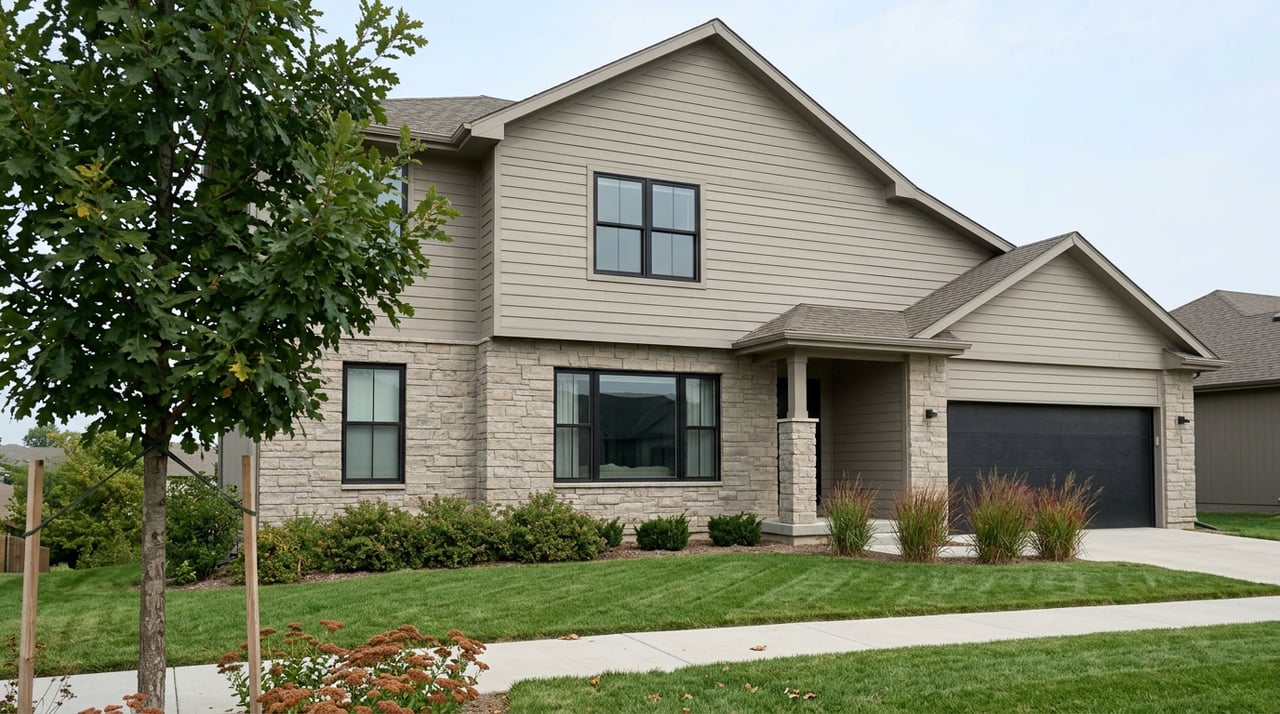
A buyer comparing two listings in Littleton this summer found them close enough to call twins. Same price range, near $650,000. Same bedroom count. Same rough drive time to Denver. Their annual property tax bills differed by roughly a factor of two, a difference worth comparing alongside the sale price.
That gap is not a fluke or a pricing error. It's built into how Littleton is drawn on a map versus how it's drawn on a tax roll. The name on the mailing address and the government actually taxing the property are not the same thing, and for a growing share of homes carrying a Littleton address, that difference is worth thousands of dollars a year.
Same Mailing Area, Three Counties, Three Different Tax Regimes
The city of Littleton's own government has said this plainly on its website: a "Littleton" mailing address doesn't necessarily mean the property sits inside Littleton's city limits. The U.S. Postal Service assigned the Littleton name to a wide mail delivery area that spans Arapahoe, Jefferson, and Douglas counties, three separate governments with three separate sets of taxing authorities.
For most of what people picture when they say "Littleton," this doesn't change much. A ranch home in South Littleton or a townhome near Historic Downtown falls under Arapahoe or Jefferson County, pays into the standard mix of county, city, school district, and a handful of long-established special districts (fire, library, water and sanitation), and lands on an effective property tax rate in the low half of one percent. County-level tax data currently puts Arapahoe County's effective rate around 0.52% and Jefferson County's around 0.51%, translating to a typical annual bill in the low $3,000s on a home in the $600,000s.
Then there's the part of the Littleton mailing footprint that behaves nothing like that.
The Zip Code Where New Construction Comes With Its Own Government
ZIP 80125, which the Postal Service also files under Littleton, covers Roxborough Park and the Sterling Ranch master-planned community, both governed not by the city of Littleton but by unincorporated Douglas County. Sterling Ranch alone is a 3,400-acre development built out under a Community Authority Board that oversees seven numbered Metropolitan Districts. Those districts exist to finance the roads, parks, amenity center, and water system the development needed before a single house could close, and Colorado's Special District Act lets them do it by issuing bonds and repaying them through a property tax mill levy layered on top of everything else a homeowner already owes.
A metro district levy can resemble an HOA fee in some ways: it can pay for landscaping, snow removal, recreation center access, and even annual state park passes. But it isn't an HOA fee. It's a tax, assessed and collected the same way county and school levies are. It's sized to service bond debt, and recent public filings show just how large that can get.
One of Sterling Ranch's numbered districts, Metropolitan District No. 3, certified a combined 95.5 mills in its most recently reported budget cycle, 33.284 mills for general operations and 62.238 mills for debt service, before any county, school, or fire district levy is added on top. Local reporting on the community in mid-2026 calculated that the metro district portion alone averages roughly $4,500 a year on a typical Sterling Ranch home, and that's before the standard taxing entities that every Douglas County property owner also pays.
| Area | County | Extra taxing layer beyond county/school | What that extra layer funds |
|---|---|---|---|
| South Littleton, Historic Downtown, Ken Caryl-area neighborhoods | Arapahoe / Jefferson | Standard special districts | Fire, library, water and sanitation |
| Sterling Ranch (ZIP 80125; Roxborough Park is also in the ZIP) | Douglas | Sterling Ranch Metropolitan District (one of seven numbered districts) | Bond debt service and operations for roads, parks, water system, and amenity center |
Stack the metro district levy on top of Douglas County's own county and school mills and a Sterling Ranch homeowner's total bill routinely lands well above what an Arapahoe or Jefferson County homeowner pays on a similarly priced house. The difference reflects the district levy in addition to the other applicable taxes.
Why Douglas County's Low Rate Is Only a Baseline
Douglas County, as a whole, carries one of the lowest effective property tax rates in the Denver metro area. A countywide rate is a baseline; the specific district levy also affects a parcel's total property-tax bill. The county's low baseline and Sterling Ranch's mill levy are both true at the same time. One describes the county. The other describes the parcel.
Prices vary by ZIP code too. Citywide, Littleton's median home value has hovered in the roughly $620,000 to $650,000 range through the first half of 2026, depending on whether you're looking at a median sale price or an average home value estimate. But break that median out by ZIP code and, as of early 2026, 80125 sits noticeably above the rest, with typical values in the $720,000 to $760,000 range, while ZIPs like 80123 and 80128 cluster closer to $590,000. Some of that gap is house size and age. Some of it is simply that a new-construction home in a metro district costs more to build and more to hold, including its tax structure.
What To Actually Check Before You Compare Two Listings
None of this means Sterling Ranch or Roxborough Park are bad places to buy. Plenty of buyers choose the trade deliberately: newer construction, amenities most HOAs don't offer, and proximity to Chatfield State Park and Roxborough State Park. The problem isn't the district. It's comparing two "Littleton" homes on price alone when the tax structures underneath them aren't comparable at all.
Before treating two listings as apples to apples, it's worth doing the following:
- Ask which county the property is actually in, not just what city the mailing address says. Arapahoe, Jefferson, and Douglas each set their own rates and their own special district rules.
- Ask directly whether the property sits inside a metropolitan district, and if so, request the most recent mill levy certification for that specific district. Districts within the same development can carry different levies from each other.
- Run the total carrying cost, not just the mortgage payment. A property tax difference of a few thousand dollars a year changes the real monthly cost of owning the home even when the sale price is identical.
- Check whether the district also layers on a separate HOA, since some communities have both a metro district mill levy and traditional HOA dues stacked together.
A county assessor's office can confirm which taxing entities apply to a specific parcel, and Colorado's mill levy certifications are public record, filed annually with the county.
A Few Questions Worth Answering Directly
Does every new community near Littleton have a metro district? No. Plenty of newer subdivisions across Arapahoe and Jefferson counties were built without one. Metro districts are specifically a Douglas County pattern for large master-planned communities like Sterling Ranch, though they exist elsewhere in the state too.
Will the mill levy go down once the bonds are paid off? It can, but only after the specific district retires its debt, which for a large multi-phase development can take decades. The levy is set annually and is public information each year, so it's worth checking rather than assuming.
Is a metro district mill levy the same as an HOA fee for mortgage qualification purposes? No. Fannie Mae lists real estate taxes and homeowners' association dues separately among the monthly housing expenses used to calculate a borrower's debt-to-income ratio.
A Littleton address tells a buyer where the mail goes. It doesn't tell them which government sent the tax bill, or how long that bill is contracted to run. Comparing two homes fairly means asking that question before comparing the price tags, not after the inspection is scheduled.
If you're weighing a home in established Littleton against one in a newer district and want the real numbers run side by side before you write an offer, Mark Hutchinson can walk through what each parcel actually owes and why. Let's Connect.
This article is general information, not legal, tax or financial advice. Consult a qualified professional about your situation.